
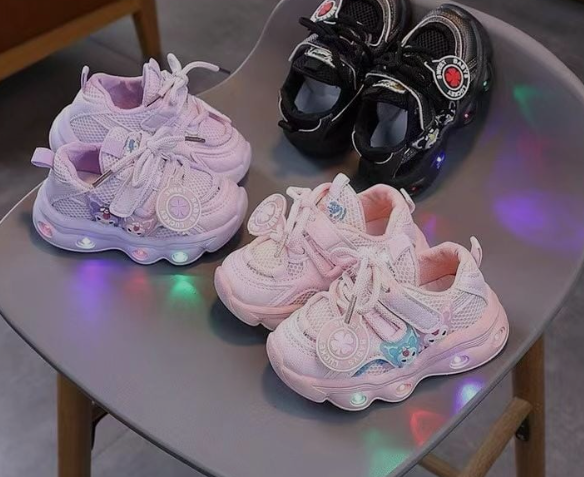
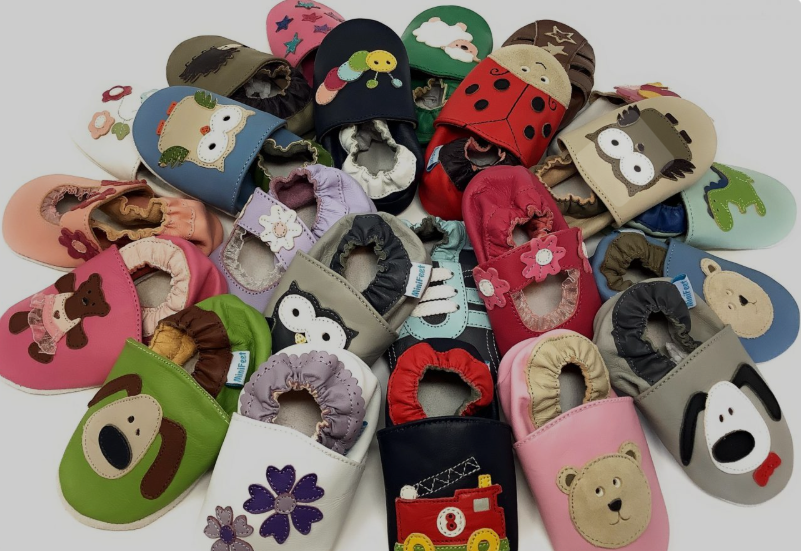
Why Baby Shoes Matter
In the earliest months, babies don’t need shoes—soft socks or booties are enough to keep little feet warm. Once your child starts walking, however, shoes play a key role in protecting their feet from injury and helping them explore safely outdoors.
What to Look For
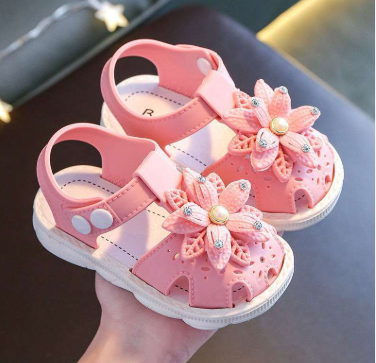
- Soft Soles
Choose flexible, non-slip soles that let the foot bend naturally. Rigid soles can interfere with balance and muscle development. - Proper Fit
Shoes should fit snugly but not tightly. Make sure there’s about a thumb’s width between the toe and the end of the shoe. Babies’ feet grow quickly, so check the fit every month. - Breathable Materials
Lightweight fabrics or leather allow airflow and prevent sweating and skin irritation. - Secure Fastening
Look for adjustable closures like Velcro straps or soft laces. This helps keep the shoe in place and makes it easier to put on and take off.
When to Buy Baby Shoes
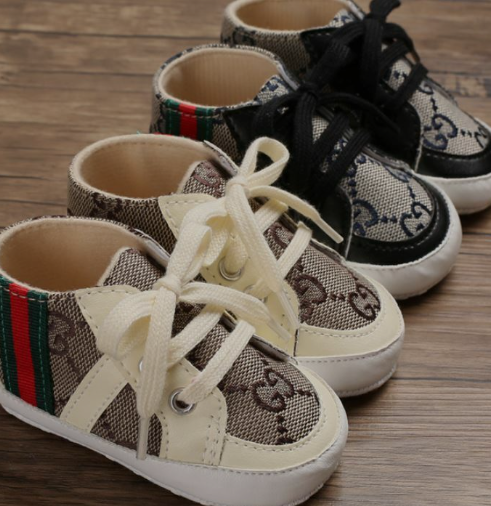
You don’t need to rush. Most pediatricians recommend letting your baby walk barefoot indoors as long as it’s safe, which helps develop foot strength and coordination. Shoes become essential once your baby starts walking outdoors.
Tips for Parents
- Always have your baby’s feet measured before buying.
- Shop later in the day when feet are slightly swollen—just like adult feet, baby feet can expand.
- Avoid hand-me-downs. Worn shoes may have molded to another child’s foot shape and could cause discomfort or alignment issues.
Final Thoughts
The first pair of baby shoes is a milestone moment. By focusing on comfort, fit, and function, you’ll help your little one walk confidently into their new world—step by tiny step.